.svg)


 Mar 09, 2026
Every personal trainer hits the same ceiling eventually.
You're booked solid. Your clients love you. And you're still anxious about next month because if your schedule dips, so does your paycheck. That's the trade-off baked into the one-on-one model: your income is always one cancellation away from shrinking.
Krystal Schouten figured out a different way. She's a pelvic floor fitness and movement specialist based in Brantford, Ontario, and she built her membership, The Body Reset Method, to reach women she could never serve through 1:1 training alone. Her path from part-time trainer to membership owner is practical, honest, and worth paying attention to if you're a fitness professional wondering whether the personal trainer membership model could work for you.
What Is the Income Ceiling Every Personal Trainer Hits?
The personal trainer income ceiling is the hard limit on how much you can earn when your revenue depends entirely on billable hours. Personal trainers typically charge $50-$100 per hour for 1:1 sessions, but there are only so many hours in a week, and only so many clients you can physically serve.
Krystal knew this feeling well.
For about five years, she ran virtual 1:1 programs in three-month packages, working alongside a physiotherapist to build customized plans for each client. It was meaningful work. It was also a ceiling.
The math on memberships looks very different. At $200 per month, 40 members generates $96,000 a year in recurring revenue without adding a single extra hour of 1:1 time. That's the shift: from selling time to selling ongoing access to your expertise.
How Did Niche Specialization Become Krystal's Competitive Edge?
Krystal didn't start out as a pelvic floor specialist. She came into the prenatal and postpartum space after becoming a mom, and a local physiotherapist encouraged her to go deeper. Krystal got certified. Then she got serious.
The problem she chose to solve is more common than most people realize. Roughly one quarter of U.S. women are affected by at least one pelvic floor disorder, and that number is projected to grow. These are women who've been told by doctors, friends, and society at large: "Welcome to motherhood. You're going to pee your pants."
Krystal's response to that? "So you're just going to continue to leak? I can help you."
That clarity of message is what niche specialization produces. Once Krystal became known for this specific problem, women started seeking her out and saying things like "someone hears me, someone sees me." She built real trust in a space that requires vulnerability, and that trust became the foundation for everything that followed.
The numbers back this up. Niche specialists consistently command higher rates than generalist trainers, and they tend to attract clients with higher motivation and retention. Krystal's policy says everything about why that works: "There's no such thing as TMI. I've heard it all. Tell me everything."
If you're considering the shift from coaching to membership, a well-defined niche makes the transition significantly cleaner. You know exactly who you're serving and exactly what transformation you're delivering.
How Did Krystal's Founding Member Launch Work?
The founding member launch is what most trainers get wrong. They spend months building the program before they tell anyone about it. Krystal did it backwards, and that's exactly why it worked.
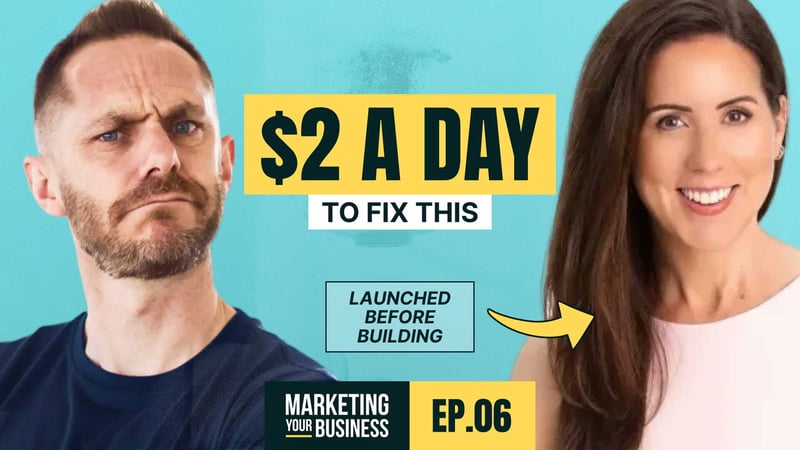
The inspiration came from a mastermind where she heard Stu McLaren say something that stopped her cold: imagine telling someone that for $2 a day, you can solve their problem. She wrote it on a sticky note. Around the same time, a woman from England found Krystal through her podcast, which made something click. Her reach didn't have to be limited to Brantford.
So she posted a simple carousel on her Instagram. No sales page. No fully built program. Just: here's what I'm doing, who's interested?
Past 1:1 clients signed up. Friends referred friends. She had founding members before she had content.
"I think when you put it out there, then you're like, okay, well now I have to do it."
This is a well-established approach for good reason. Selling before building removes the risk of creating something nobody wants. It also forces clarity. When real people pay real money, you learn fast what they actually need. If you want to understand how to launch a membership before everything is built, Krystal's story is a clean template.
She wasn't worried about not having all the content ready because she'd already been "one week ahead" of her members before. During COVID, she started filming workouts and figured it out in real time, eventually building out a full 12-week program. That experience gave her the confidence to do it again.
How Did the Physiotherapy Partnership Build Her Referral Engine?
One detail that's easy to overlook in Krystal's story is that she didn't build her credibility alone. Her partnership a local phsyio gave her a referral channel that most personal trainers don't have.
When a physiotherapist assesses a patient and identifies pelvic floor dysfunction, they need somewhere to send that patient for ongoing fitness work. Krystal became that place. The physio handled the clinical assessment. Krystal handled the movement and fitness programming.
This kind of professional partnership is underutilized in the fitness industry. Healthcare providers regularly see patients who need exactly what fitness professionals offer, but they need someone they trust to send those patients to. Specializing in a clinical-adjacent niche makes you that person.
For Krystal, it created a steady flow of warm referrals from people who already understood and valued the work. That's a very different starting point than cold social media outreach.
How Did She Build Content Without Starting From Scratch?
One of the most practical things Krystal did was refuse to treat her membership as a blank slate.
She had five years of 1:1 program content. She'd already figured out what worked, what to sequence, and how to explain complex movement concepts to women who were new to pelvic floor fitness. So she took that existing content and rebuilt it into her 5-stage Success Path, starting with The Awakening (beginner foundations) and building toward The Empowered (full-body workouts and lasting confidence).
This is a pattern worth copying. You probably already have more content to include in a membership than you think. Client handouts, exercise progressions, explanations you've given hundreds of times in 1:1 sessions. All of it can become membership content.
Krystal's one honest note on this: some of her earliest content no longer feels like her. Her presentation style evolved, and the first videos she recorded don't match who she is now. She's going back to update them. That's normal. You don't have to get it perfect before you launch. You get better as you go, and your members benefit from both the content and the real person behind it.
What Limiting Beliefs Almost Stopped Her?
Krystal is unusually honest about the mental side of building a membership, and that honesty is one of the most valuable parts of her story.
Her biggest belief to work through was simple and blunt: "I can't be big."
She looks up to other women in the pelvic floor space and found herself asking why she was shrinking instead of competing. "I look up to a lot of women in the pelvic floor space. Why can't I do that?" She also leaned hard into being "the Brantford person" because local felt safer than global, even as her podcast was reaching women in other countries.
Cancellations hit her hard. She takes them personally. She uses morning meditation through Insight Timer to manage the emotional rollercoaster, and she's actively working on separating her self-worth from her monthly churn numbers.
This matters for anyone considering the growth phase after a first membership launch. The practical steps are learnable. The mindset work is ongoing. Both are required.
What Does a Personal Trainer Membership Model Actually Look Like?
Krystal's membership isn't abstract. Here's what it actually looks like.
The offer is transformation, not content. The Body Reset Method isn't selling videos. It sells the outcome: women who stop leaking, start jumping on trampolines with their kids, and stop avoiding the activities they used to love. Members get guided video workouts, monthly live Zoom coaching sessions, weekly coaching tips, mini-challenges for habit-building, and a private community. The content is the delivery mechanism, but the transformation is the product.
The structure is sequential. Krystal built a 5-stage Success Path that takes members from The Awakening through The Reconnection, The Rebuild, The Rise, and finally The Empowered. Members always know where they are and what's next. No overwhelm, no ambiguity.
The pricing is accessible by design. The $2-a-day framing wasn't accidental. It makes the value concrete and removes the "I can't afford this" objection before it forms. If you're figuring out your own numbers, this membership pricing strategy guide walks through the full decision process.
The community is the retention engine. Members who connect with each other and feel seen by Krystal stay longer than members who just consume content. The relationship is the product, not just the workouts.
If you want to see how other fitness and wellness professionals have built this out, these membership site examples are worth reviewing.
Is a Fitness Membership Model Right for You?
A fitness membership makes sense if people regularly ask you the same questions, if you've solved a specific problem for a specific person more times than you can count, and if you're ready to stop capping your income at the number of hours you can work.
It doesn't require a massive audience. Krystal launched with past clients and social media followers who already trusted her. It doesn't require everything to be built before you start. She had founding members before she had a full content library.
What it does require is clarity on who you serve and what you help them do. That's it. Everything else you can figure out.
Krystal's advice is about as direct as it gets: "Just do it. Find your voice. Put it out there for accountability. What if it doesn't work? What if it does?" You can see how she's put that into practice at Fitness Reset.
For a full walkthrough on setting up the mechanics, this guide to starting a membership site covers the practical steps from pricing to platform to launch.
Frequently Asked Questions
How much can a personal trainer make with a membership model?
It depends on your pricing and member count, but the math shifts significantly from 1:1 work. At $200 per month, 40 members generates $96,000 per year in recurring revenue without adding more hours. Most trainers start smaller and grow from there.
Do you need a big audience to launch a fitness membership?
No. Krystal launched with past 1:1 clients and social media followers. The founding member approach means you're selling to warm audiences who already know your work. A small, trusting audience beats a large, disengaged one.
What should a personal trainer membership include?
The best fitness memberships include a clear progression path, video workouts or tutorials, some form of community or access to the trainer, and a defined outcome. Krystal's 5-stage Success Path is a good model: members progress from foundational awareness through reconnection, rebuilding, and eventually full empowerment.
How do you transition from 1:1 training to a membership?
Start by identifying the content and programs you've already built for 1:1 clients. Most trainers have far more reusable material than they realize. Then launch to your existing audience with a founding member offer before your content library is complete. Build alongside your members.
What makes pelvic floor fitness a good membership niche?
It solves a specific, embarrassing, underserved problem that affects roughly one quarter of U.S. women. Niche specialization commands higher rates, builds stronger trust, and generates consistent referrals from healthcare providers. The same logic applies to any fitness niche with a clear, solvable problem.
Want to subscribe to Stu's Marketing Your Business podcast? Click here. Plus, there's a whole bunch of other goodies waiting for you when you sign up