.svg)


 Mar 23, 2026
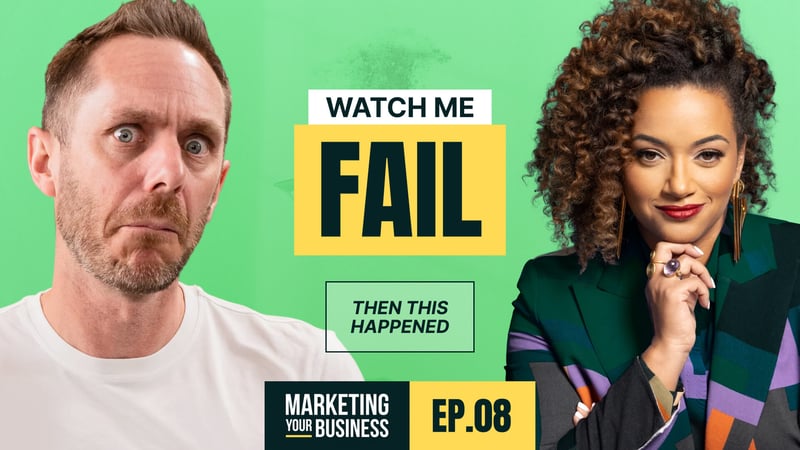
On a recent episode of the Marketing Your Business podcast, Stu McLaren sat down with Rachel Rodgers, founder of Hello Seven and builder of an eight-figure business, for a conversation that covered everything from moving your family to Portugal to running a Kickstarter that nearly flopped in front of everyone.
What came out of it was a masterclass is something most business advice skips over: the willingness to try something new, let people watch, and keep going when it is not working.
Here is what stood out.
She gives herself permission to fail (and you should too)
Rachel has a framework for doing scary things, and it started when she was 19. She'd been invited to intern for Senator Hillary Clinton in Washington, D.C. The night before she was supposed to leave, she was sobbing in the shower. Her mom knocked on the bathroom door and said something simple: "If you go and you don't like it, you can just come back."
That stuck. Rachel now applies the same logic to every big decision.
"I give myself an out and say, you can always get another crappy job. You could always find another apartment in the same area. You can always go back."
It's the same approach she took when moving her entire family to Portugal. She and her husband did a scouting trip first, during the worst weather the locals had ever seen. They still loved it. So they committed to 12 months with no property purchase, no long-term lock-in. Two months in, they knew they were staying.
The takeaway for creators and membership builders: you don't have to bet everything on one decision. Give yourself an out. It makes the leap easier, and once you're in motion, you'll know fast whether it's right.
The Kickstarter that almost didn't make it
Rachel's team filmed a week of content in Portugal. Interviews, walks and talks, behind-the-scenes footage at local businesses. The footage was so good that what started as a podcast reboot turned into a full TV show concept.
They already had a trailer. And Rachel had an idea: "People who do shows like this do Kickstarter."
So they set a $155,000 goal and launched.
The first 48 hours went well. They raised about $65,000. Then it stopped.
"After that it was crickets," Rachel said. "I'm like, is the internet down?"
By day 19 of 23, they still hadn't hit their number. Rachel made a video saying she was proud of the project regardless of the outcome. She meant it.
"I love that I have the opportunity as a seasoned entrepreneur for everyone to watch me absolutely, completely fail this huge project," she said. "I'm allowed to make mistakes. I want you to know that I'm allowed."
That's a rare posture in a world where most entrepreneurs only share wins.
Getting scrappy saved the campaign
When the original marketing plan didn't get them to the goal, Rachel's team pivoted hard. They split their client list among ten team members and started calling people directly.
"Every time we talk to our client, they go and back this project. So let's create a list."
Even the calls that didn't result in a pledge created connection. The team got to have real conversations with their community. It was relationship-building disguised as fundraising.
Then, with about $40,000 still to go on the second-to-last day, they launched a live stream telethon. They played the trailer, shared behind-the-scenes stories, did dance breaks (complete with a money gun), and stayed on camera for hours.
"My team was like, this feels like a political campaign," Rachel laughed. "We feel like we're running for mayor."
Within a couple of hours on the live stream, they closed the gap and overshot the goal. They went into the final day knowing it was done.
The lesson here isn't complicated: when the plan stops working, pick up the phone. Do something that doesn't scale. Talk to people directly.
Why live selling works (and it's not what you think)
One of the most interesting parts of the conversation was Rachel's take on live streaming as a sales tool.
"I'm obsessed with this," she said. "It felt like QVC. Connecting with people, you're a saleswoman... 'Do you like this sweater? Guess where it's from?' That's what it felt like."
Her practical tips for anyone thinking about trying live social selling:
- Get a co-host. Talking solo for hours will burn you out. Having someone to bounce off of keeps the energy up and gives you breaks.
- Prepare content blocks you can pull in. Trailer clips, behind-the-scenes videos, graphics like a fundraising thermometer. Whenever the conversation lulls, drop one in.
- Make it feel real. Rachel's kid walked in during the stream. People loved it. "People get to experience whatever's happening," she said. Viewers stayed for four hours.
- Broadcast everywhere. They used multi-streaming software to push the stream to Instagram, YouTube, Facebook, and their client groups simultaneously. All comments fed into one place.
The reason it works comes down to one thing: vulnerability builds trust. "When we're vulnerable, it gives them permission to be vulnerable," Rachel said. "Trust is built when you're being vulnerable. And anything that creates that in your marketing is going to create trust."
If you're a course creator or membership builder looking for new ways to connect with your audience, a casual, unscripted live stream might do more for your business than another polished webinar.
Community and implementation beat information every time
When Stu asked Rachel about the biggest opportunities for creators right now, her answer was direct.
"It's all about community. That's really what took Hello Seven into an eight-figure business. We had a Facebook group, then we turned it into a membership community, and that pivoted us to eight figures. We went from $5 million to $10 million in a year."
But she went further than just saying "build community." She pointed to a specific shift that creators need to understand.
"It's not just about information anymore. Information is everywhere. Information is in ChatGPT. However, just because you have the information doesn't mean you're doing the thing."
Her advice: take your existing course or program and add implementation and accountability alongside a community. That combination is what people will pay for in 2026 and beyond, because a ChatGPT prompt can give someone the steps, but it can't make sure they follow through.
For anyone building on Membership.io, this reinforces the core value of a membership: recurring value through community, accountability, and support that information alone can't replicate.
Build your entrepreneurial muscle in a tough economy
Rachel had strong words for creators who are pulling back because the economy feels uncertain.
"Covid got people thinking this is how it's always supposed to be," she said. "If you built your business during that time, you think that's the norm. It is not the norm."
Her point: the creators who build their sales and marketing skills when things are hard are the ones who explode when conditions improve. Quitting during a downturn means you lose the chance to develop real entrepreneurial grit.
And she offered a perspective shift that's worth remembering:
"Most people, to have a successful business, need ten clients or 50 clients or 100. You're not Apple. Whatever the economy is doing doesn't actually need to affect your business. There are surely 50 people who want to buy your thing."
That reframe is powerful. You don't need the whole market. You need your people.
What you can take from this
Rachel's Kickstarter story isn't about Kickstarter. It's about what happens when you put a raw idea into the world and commit to it, even when the numbers say you're losing.
A few things worth taking with you:
- Give yourself an out so the leap feels less permanent. You'll move faster.
- Build in public. Let people watch the messy middle. It creates more trust than a highlight reel ever will.
- When the plan stalls, get scrappy. Phone calls, live streams, direct messages. Do the unscalable things.
- Add community and accountability to your offers. Information alone isn't enough anymore.
- Don't wait for the perfect economy. Build your skills now. The creators who sell through hard times are the ones who win big when things turn around.
If you're sitting on an idea for a membership, a course, or a community and waiting for the right moment... Rachel's story is your sign. Launch it. Let people watch. And if it doesn't work the first time, you haven't lost. You've learned.
Want more marketing and membership tips? Subscribe to Stu McLaren's Marketing Your Business podcast!